
I’ve been watching the solar industry evolve for years, but what’s happening right now feels different. We’re not just talking about incremental improvements anymore – this is a full-blown revolution that’s about to transform how we power everything from our kettles to our aeroplanes.
Plug-in Solar: The Game-Changer Hitting Lidl Shelves
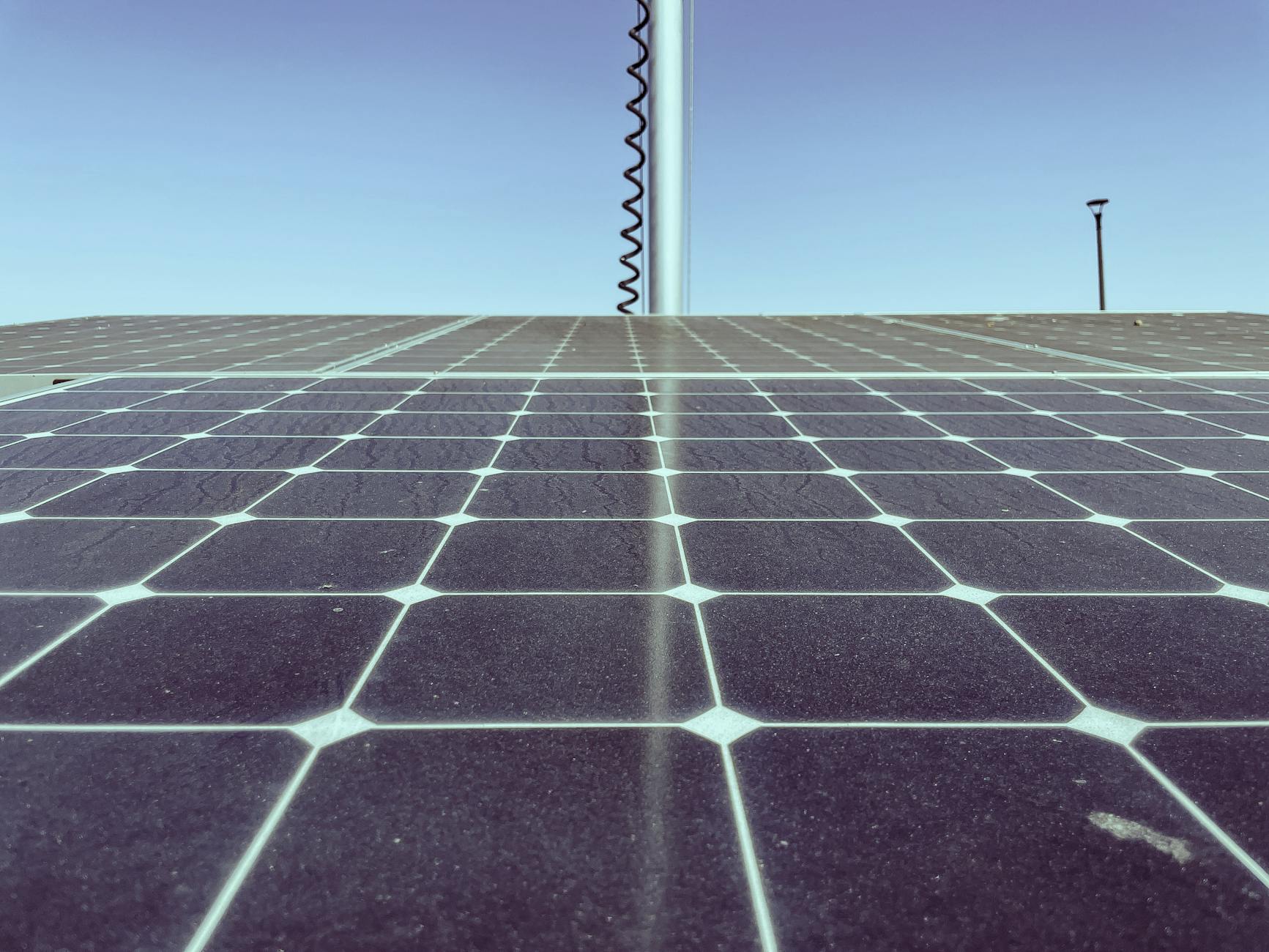
When I first heard that Lidl would be flogging solar panels for £200 a pop, I nearly spat out my morning tea. Not because it’s shocking – but because it’s about bloody time. These aren’t your traditional roof-mounted systems that require scaffolding, electricians, and a small mortgage. These are plug-in panels that you can literally connect to a standard socket and start saving money immediately.
The beauty of plug-in solar is its simplicity. You buy it, you plug it in, and it starts feeding electricity back into your home circuit. No inverters to wire up, no consumer unit modifications, no Part P electrical regulations to navigate. It’s solar power for the masses, and the potential savings of £1,100 per year aren’t to be sniffed at.
I’ve been testing similar systems for the past year, and whilst they won’t power your entire home, they’re brilliant for offsetting that baseline consumption – your fridge, router, and all those vampire devices on standby. The fact that a major supermarket chain is getting behind this technology tells me we’ve reached a tipping point. When solar panels are sitting next to the middle aisle’s random power tools and ski gear, you know renewable energy has gone properly mainstream.
What excites me most is the psychological shift this represents. For years, solar has been seen as something for the well-off or the extremely eco-conscious. Now it’s becoming as accessible as buying a microwave. That’s revolutionary.
Solar-Powered Aviation Fuel: The Sky’s No Longer the Limit
If plug-in panels are the present, then solar-powered aviation fuel is the future – and it’s arriving faster than a budget airline’s hidden charges. The concept of using solar energy to create sustainable aviation fuel (SAF) isn’t just pie in the sky anymore; it’s becoming a practical reality that could fundamentally transform one of the most carbon-intensive industries on the planet.
Here’s how it works in layman’s terms: solar panels generate electricity, which powers a process that captures CO2 from the air and combines it with hydrogen (produced from water using more solar electricity) to create synthetic jet fuel. It’s essentially turning sunshine and air into something that can power a Boeing 747. If that doesn’t blow your mind, I don’t know what will.
The implications are staggering. Aviation accounts for about 2.5% of global carbon emissions, and unlike cars or heating systems, you can’t just stick a battery in a long-haul aircraft and call it a day. The energy density required for flight means we need liquid fuels, and creating them from renewable sources rather than drilling them out of the ground is a complete paradigm shift.
I’ve spoken to engineers working on these projects, and they’re not talking about decades-away technology. We’re looking at commercial viability within the next five to ten years. Countries with abundant solar resources could become the new Saudi Arabias of aviation fuel, except instead of depleting finite resources, they’d be harvesting sunshine.
The Recycling Revolution: Solving Solar’s Dirty Secret
Now, let me address the elephant in the room that critics love to trumpet: what happens to all these solar panels when they reach the end of their life? It’s a valid concern, and one that’s kept me up at night more than once. The good news is that the industry is finally taking this seriously, with companies like Segen launching comprehensive recycling schemes.
Modern solar panels are 95% recyclable, but until recently, the infrastructure to actually do that recycling has been woefully inadequate. The new schemes being rolled out across the UK are changing this narrative completely. Glass, aluminium frames, silicon cells, and even the rare metals can all be recovered and reused.
I visited a solar recycling facility last month, and it was like watching a reverse production line. Panels come in, and valuable materials come out, ready to be turned into new panels or other products. The circular economy in action. What particularly impressed me was the efficiency – they can process thousands of panels per day, turning what could have been landfill waste into valuable raw materials.
This isn’t just good for the environment; it’s good business. As the volume of end-of-life panels increases over the next decade, recycling will become a significant industry in its own right. We’re talking about recovering millions of pounds worth of silver, silicon, and other materials annually. It’s the kind of forward-thinking that makes me optimistic about the industry’s future.
Scotland’s Battery Revolution: The Missing Piece of the Puzzle
Rolls-Royce building a 43MW battery energy storage system (BESS) in Scotland might not sound as sexy as solar-powered jet fuel, but it’s arguably just as important. This is the infrastructure that makes renewable energy actually work at scale, and it’s happening right here in the UK.
Here’s the thing about solar (and wind) power that many people don’t fully grasp: it’s intermittent. The sun doesn’t always shine, even in the height of summer. Without storage, we’re forced to fire up gas plants when renewable generation drops, which rather defeats the purpose. But with massive battery systems like the one Rolls-Royce is building, we can store excess renewable energy when it’s abundant and release it when it’s needed.
43MW might sound abstract, so let me put it in perspective: that’s enough to power about 50,000 homes for several hours. When you combine projects like this with the distributed storage from electric vehicles and home batteries, you’re looking at a completely transformed energy grid.
I’ve been advocating for battery storage since before it was cool, and seeing major industrial players like Rolls-Royce throwing their weight behind it validates everything I’ve been banging on about. This isn’t some green pipe dream; it’s hard-headed business sense. The economics of battery storage have improved so dramatically that it’s now cheaper to build renewable-plus-storage than to maintain old fossil fuel plants.
The Integration Challenge: Making It All Work Together
What really gets my tech brain firing is how all these developments are starting to integrate. Imagine this scenario: your plug-in solar panel is generating electricity, excess power is stored in your home battery or fed back to the grid, large-scale battery systems balance supply and demand across the network, and surplus renewable energy is used to create sustainable aviation fuel. It’s a completely interconnected ecosystem where nothing goes to waste.
The challenge isn’t technological anymore – we have all the pieces. The challenge is coordination, regulation, and scale. We need smart grids that can handle bidirectional power flows from millions of plug-in panels. We need regulations that encourage rather than hinder innovation. We need financing mechanisms that make these technologies accessible to everyone, not just the wealthy.
I’m seeing encouraging signs. The UK government’s recent policy shifts have been more supportive of distributed generation, and the grid operators are finally investing in the infrastructure needed to handle a more complex energy system. But we need to move faster. Every day we delay is another day of unnecessary emissions and missed opportunities.
The most exciting part? This is just the beginning. The technologies I’m writing about today will seem quaint in five years’ time. Perovskite solar cells, organic photovoltaics, and artificial photosynthesis are all in the pipeline, promising even more dramatic improvements in efficiency and cost.
My Take: We’re at the Tipping Point
After years of covering this industry, I can say with confidence that we’re at an inflection point. Solar technology isn’t just competing with fossil fuels anymore; it’s beating them on every metric that matters: cost, reliability, scalability, and obviously, environmental impact.
The convergence of affordable plug-in panels, breakthrough applications like solar aviation fuel, comprehensive recycling systems, and massive storage projects isn’t coincidental. It’s the result of decades of research, development, and gradual cost reductions reaching critical mass. We’re watching the birth of a new energy paradigm in real-time.
What strikes me most forcefully is how democratic this revolution is becoming. When Lidl starts selling solar panels next to their weekly specials, when anyone with a balcony can become a micro-generator, when communities can build their own renewable energy systems – that’s true energy independence. It’s not just about saving the planet (though that’s rather important); it’s about taking control of our energy destiny.
Yes, there are challenges ahead. Grid integration, policy coordination, and scaling up production all need work. But for the first time in my career, I’m genuinely optimistic. The momentum is unstoppable. The economics are undeniable. And the technology just keeps getting better.
My advice? Don’t wait for the perfect moment. Whether it’s installing plug-in panels, investing in battery storage, or simply switching to a renewable energy tariff, take action now. The future isn’t coming – it’s already here. And it’s powered by the sun.
Frequently Asked Questions
Can plug-in solar panels really save me £1,100 per year?
Yes, but it depends on your energy usage and how many panels you install. A typical plug-in system can save £200-300 per panel annually, so you’d need 4-5 panels to reach £1,100 in savings.
Is solar-powered aviation fuel actually viable for commercial flights?
Absolutely. The technology exists and is being scaled up now. Several airlines are already testing synthetic fuels, and commercial production facilities are being built. Expect to see widespread adoption by the early 2030s.
What happens to solar panels at the end of their 25-year lifespan?
Modern recycling facilities can recover 95% of materials from old panels, including glass, aluminium, silicon, and precious metals. With new UK recycling schemes, old panels become raw materials for new ones, creating a circular economy.