Measure power-station runtime with a plug-in meter
Turn a plug-in electricity meter reading into a runtime estimate for the equipment you really use.
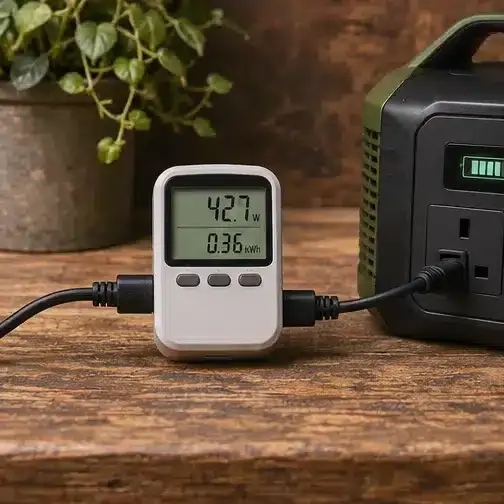
Measure watt-hours over a useful period
Plug a compatible energy meter into a mains socket and connect the device you want to test. Choose a period that includes normal use. A monitor that sleeps at lunchtime or a fridge that cycles overnight will show why a one-minute reading can mislead you.
Do the conversion
If the meter records 0.24 kWh over six hours, that is 240 Wh. Dividing by six gives an average of 40 W. A station that can deliver 500 usable Wh to a similar load gives an estimate of 12½ hours. The capacity printed on the case is normally a battery specification. It can differ from the energy delivered at an AC outlet.
Run a short comparison before relying on it
Try the same device on the station with the correct outlet and cable, watching how quickly the battery drops and whether the inverter stays on at low loads. For motors or compressors, check surge ratings separately. Use the meter only within its own published ratings and follow the instructions for both the station and the appliance.
Work through your own figures with the portable power calculators.