
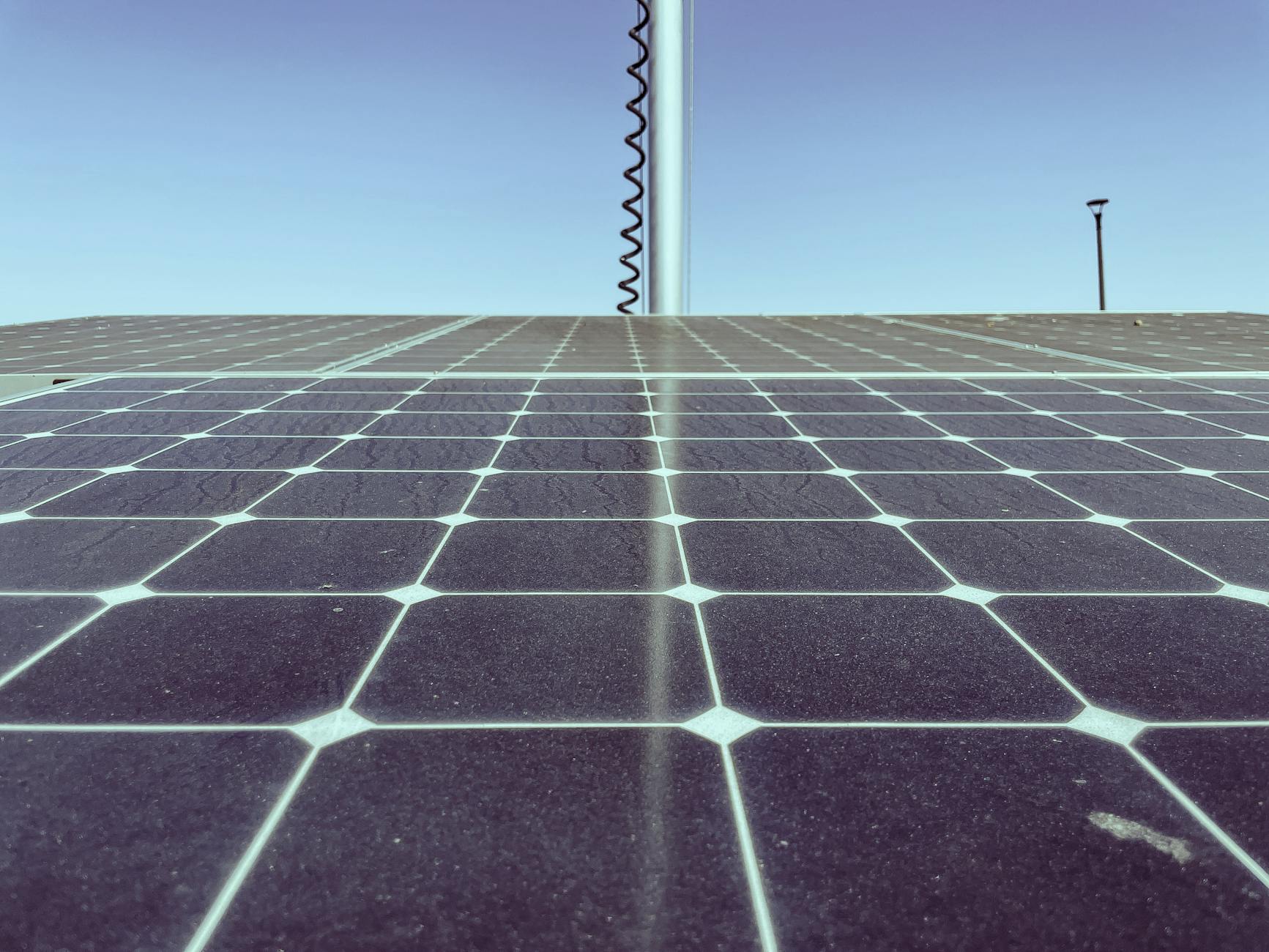
I’ve been watching the solar industry evolve for over a decade, but what I’m seeing right now in 2026 is nothing short of revolutionary. From producing jet fuel with sunlight to recycling old panels into new power generators, we’re witnessing a complete transformation of what solar technology can achieve.
The Sky’s No Longer the Limit: Solar-Powered Aviation Fuel
When I first heard about using solar energy to create sustainable aviation fuel, I’ll admit I was sceptical. But having dug into the latest developments, I’m genuinely excited about what’s happening. We’re not talking about slapping solar panels on aircraft wings here – this is about using concentrated solar thermal energy to transform CO2 and water into synthetic jet fuel.
The process works by focusing sunlight to generate extreme temperatures – we’re talking over 1,500°C – which drives thermochemical reactions that split water and CO2 molecules. These are then recombined into liquid hydrocarbons that can power conventional jet engines. It’s essentially reversing combustion using the sun’s energy, and it’s brilliant.
What really strikes me is the potential scale. A solar fuel production facility covering just a few square kilometres could theoretically produce enough synthetic fuel to power thousands of flights annually. Given that aviation accounts for roughly 2.5% of global emissions, this technology could be a game-changer for achieving net-zero targets.
The economics are improving rapidly too. While solar jet fuel currently costs more than fossil-based alternatives, the gap is narrowing. With carbon pricing and the EU’s sustainable aviation fuel mandates kicking in, I reckon we’ll see commercial viability within the next five years. Airlines are already queuing up to secure future supplies.
Oxford’s Perovskite Revolution: More Power, Less Space
I recently visited Oxford PV’s facility, and what they’re achieving with perovskite-silicon tandem cells is remarkable. These aren’t your standard solar panels – they’re pushing efficiency boundaries that seemed impossible just a few years ago. We’re now seeing commercial cells hitting 28-29% efficiency, compared to the 20-22% typical of standard silicon panels.
The secret lies in layering a thin film of perovskite crystals on top of traditional silicon cells. Perovskites capture different wavelengths of light than silicon, so combining them creates a panel that harvests more of the solar spectrum. It’s like having two solar panels in one, but without doubling the size or cost.
For UK installations where space is at a premium – think urban rooftops or small commercial buildings – this efficiency boost is transformative. A typical residential installation that might have produced 4kW with standard panels can now generate 5.5kW from the same roof area. That’s enough additional power to run an electric vehicle or heat pump.
What impresses me most is the manufacturing approach. Oxford PV has retrofitted existing silicon solar cell production lines to add the perovskite layer, rather than building entirely new factories. This keeps costs down and accelerates deployment. They’re already shipping commercial products, with major installers clamouring to get their hands on them.
The Great Panel Recycling Challenge Finally Gets Solved
Here’s a dirty secret the solar industry hasn’t wanted to discuss: what happens to panels after their 25-30 year lifespan? With millions of panels installed in the early 2000s now approaching retirement, we’re facing a potential waste crisis. That’s why Segen’s new recycling scheme has caught my attention.
The programme tackles what’s been a major headache for installers and homeowners alike. Previously, disposing of old solar panels meant either expensive specialist waste handling or, worse, panels ending up in landfill. Segen’s approach creates a circular economy for solar technology.
Their process recovers up to 95% of semiconductor materials from old panels, including valuable silver and silicon that can be refined and reused in new panels. The aluminium frames and glass are also fully recyclable. It’s a comprehensive solution that transforms waste into resources.
What’s clever about their scheme is the collection network. Installers can drop off old panels at regional hubs when collecting new stock, minimising transport emissions and costs. For large commercial decommissioning projects, they offer on-site collection. The pricing structure incentivises proper recycling – it’s actually cheaper than skip hire once you factor in the avoided landfill taxes.
I’ve already signed up my installation business to the scheme. The peace of mind it offers customers is invaluable, and it’s the right thing to do environmentally. As someone who’s installed thousands of panels over the years, knowing they won’t end up as waste feels good.
Record-Breaking Auctions Signal Solar’s Unstoppable Rise
The latest Contracts for Difference auction results have blown me away. Solar projects secured a record 3.3GW of capacity – that’s enough to power over 2 million homes. The strike prices achieved were the lowest ever seen in the UK, with some projects bidding under £50/MWh.
To put this in perspective, that’s cheaper than gas-fired power generation even before carbon costs. We’ve reached a tipping point where solar isn’t just the green choice; it’s the economical choice. No subsidies needed, no special pleading – just pure market competitiveness.
The geographic spread is encouraging too. While the south of England predictably dominates, we’re seeing significant projects in Yorkshire, Scotland, and even Wales securing contracts. Modern panels perform well even in our cloudy climate, and developers have gotten smart about site selection and grid connections.
What excites me most is the innovation these projects are bringing. Many incorporate battery storage, allowing them to provide power when the sun isn’t shining. Others feature agrivoltaics – combining farming with solar generation. One project I’m particularly keen on uses tracking systems that follow the sun, boosting output by 25%.
The speed of deployment is accelerating too. Streamlined planning processes and modular construction techniques mean a 50MW solar farm can go from breaking ground to generating power in under six months. Compare that to the decade-plus timeline for nuclear projects, and you understand why investors are piling into solar.
Global Regulation Trends: Lessons from Japan’s Tightening Rules
While the UK solar market is booming, it’s worth looking at what’s happening globally. Japan’s recent regulatory tightening offers important lessons for our market. They’re introducing stricter requirements for panel disposal, grid stability contributions, and land use assessments.
Initially, I was concerned these regulations might stifle growth. But having studied the details, I believe they’re creating a more sustainable and professional industry. Fly-by-night operators are being squeezed out, while quality installers who do things properly are thriving.
The disposal regulations mirror what Segen is introducing here voluntarily. Japan now requires developers to set aside funds for end-of-life panel recycling from day one. It adds a small cost to projects but ensures environmental responsibility throughout the asset lifecycle.
Their grid stability requirements are particularly interesting. Large solar farms must now include smart inverters that can provide reactive power support and frequency regulation. This transforms solar from a grid burden to a grid asset, paving the way for even higher renewable penetration.
The UK should take note. While our lighter-touch regulation has enabled rapid growth, some guardrails would benefit the industry long-term. I’d particularly like to see mandatory recycling provisions and stronger quality standards for installations. Too many cowboys are still operating, giving solar a bad name with shoddy work.
My Take: Solar’s Bright Future Is Already Here
After years in this industry, I can confidently say we’re living through solar’s golden age. The convergence of breakthrough technologies, economic competitiveness, and environmental necessity has created perfect conditions for explosive growth.
What excites me most isn’t any single innovation, but how they’re combining. Perovskite panels generating more power per square metre, feeding into smart grids that can handle variable generation, with old panels being recycled into new ones – it’s a beautiful circular system emerging.
The aviation fuel development particularly fires my imagination. If we can power jets with sunshine, what can’t we do? It demonstrates solar’s potential extends far beyond electricity generation into replacing fossil fuels across all sectors.
For UK businesses and homeowners, the message is clear: if you’re not already planning solar installations, you’re missing out. Costs have never been lower, efficiency never higher, and the technology never more reliable. With electricity prices remaining volatile and carbon taxes increasing, the financial case is compelling.
My prediction for the next five years? Solar will become the UK’s largest electricity source, overtaking gas by 2030. Panel recycling will be routine, not exceptional. And solar-derived fuels will begin displacing fossils in transport and heating. The future isn’t just bright – it’s solar-powered.
Frequently Asked Questions
How efficient are the new perovskite-silicon solar panels compared to standard panels?
The latest perovskite-silicon tandem cells achieve 28-29% efficiency, compared to 20-22% for standard silicon panels. This means roughly 35% more power from the same roof area.
What happens to old solar panels in the new recycling schemes?
Modern recycling recovers up to 95% of materials including silver, silicon, aluminium and glass. These materials are refined and reused in manufacturing new panels, creating a circular economy.
Is solar-produced aviation fuel actually viable for commercial flights?
Yes, solar-derived synthetic fuel is chemically identical to conventional jet fuel and can power existing aircraft. While currently more expensive, costs are falling rapidly and several airlines have already placed orders.