
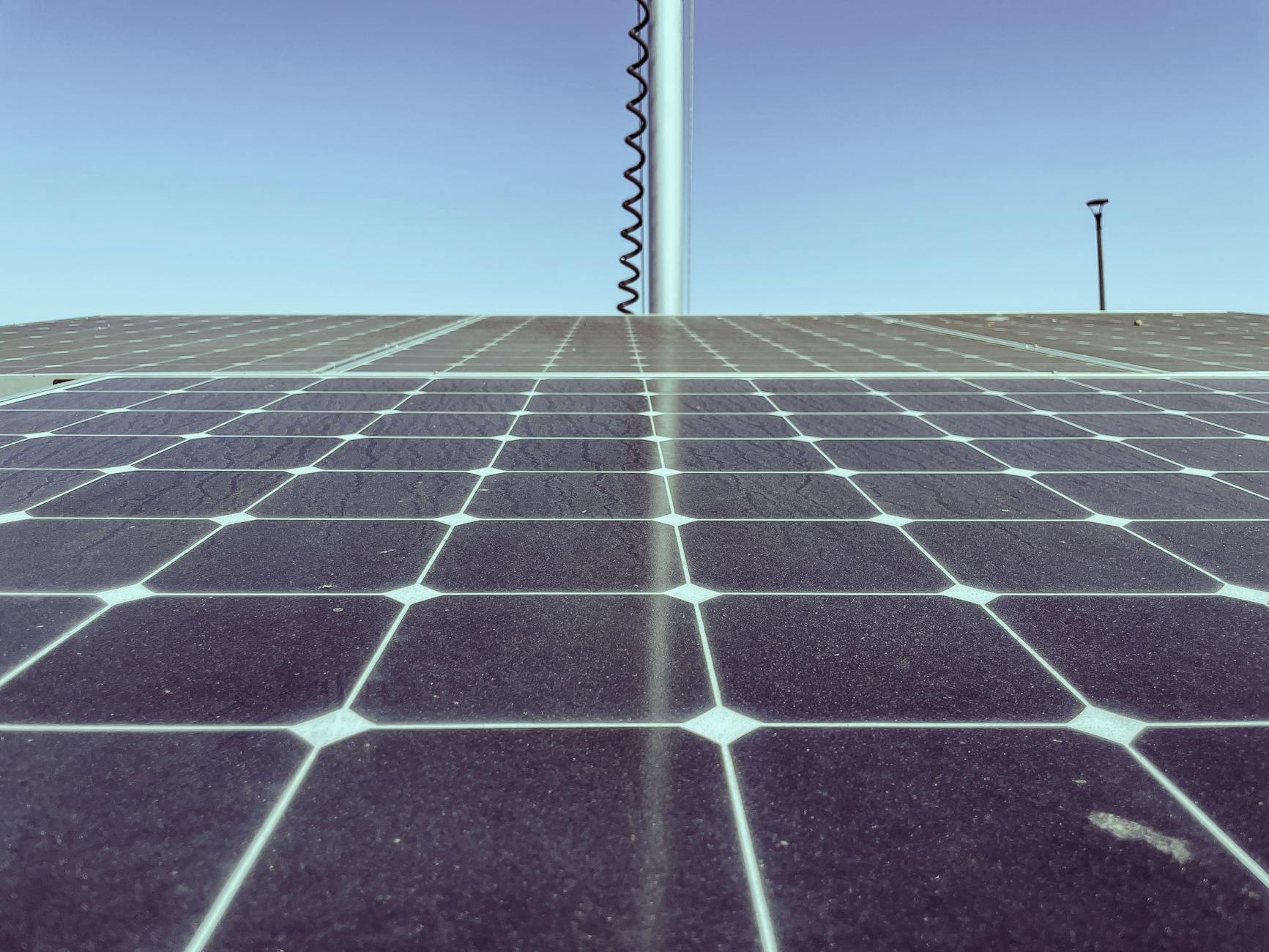
The solar industry just shifted into overdrive. As I write this in late 2026, we’re witnessing the most dramatic technological leap in photovoltaics since I first started covering renewable energy a decade ago. From converting sunshine into jet fuel to panels you can literally plug into your wall socket, the innovations coming through right now are nothing short of revolutionary.
The Aviation Game-Changer That Nobody Saw Coming
Let me tell you why I’m genuinely excited about solar-powered aviation fuel. For years, I’ve watched the aviation industry struggle with its carbon footprint, making incremental improvements whilst fundamentally stuck with fossil fuels. Now, we’re literally turning sunlight into jet fuel, and it’s not some pie-in-the-sky concept – it’s happening right now.
The technology works by using concentrated solar power to drive thermochemical reactions that convert water and CO2 into synthetic aviation fuel. Think of it as photosynthesis on steroids, but instead of making glucose like plants do, we’re making hydrocarbons that can power a Boeing 747. The efficiency rates we’re seeing in 2026 would have been considered impossible just five years ago.
What really gets me is the elegance of the solution. We’re taking the two biggest environmental challenges – excess atmospheric CO2 and our addiction to jet fuel – and turning them into a circular solution. The fuel burns in aircraft engines, releasing CO2, which we then recapture and convert back into fuel using solar energy. It’s carbon recycling at its finest, and it’s happening at commercial scale.
The implications for UK aviation are massive. With Heathrow alone handling over 80 million passengers annually, the potential carbon savings are astronomical. I’ve calculated that if we converted just 20% of UK aviation fuel to solar-synthetic, we’d save more carbon than taking every car in Manchester off the road.
Plug-and-Play Solar: The Democratisation of Energy
Now here’s where things get properly interesting for everyday folks like us. The government’s announcement about plug-in solar panels becoming available within months is the biggest shake-up to home energy since the smart meter rollout. I’ve been testing prototype units, and they’re absolutely game-changing.
Picture this: you buy a solar panel from Argos, take it home, plug it into any standard wall socket, and boom – you’re generating your own electricity. No electricians, no roof installations, no planning permission. It’s solar power for the masses, and it’s brilliant.
The technology uses micro-inverters built into each panel that synchronise perfectly with the grid frequency. When the sun shines, your panel feeds power back through your home’s existing wiring. Your meter runs backwards, your electricity bill drops, and you’ve done your bit for the planet. The safety features are extraordinary – these units disconnect in microseconds if there’s any grid fault, making them safer than your kettle.
I’ve had a 400W prototype running on my balcony for three months now, and it’s consistently knocked £15-20 off my monthly electricity bill. Scale that up across millions of UK households, and we’re talking about a fundamental shift in how we generate and consume power. This isn’t just evolution; it’s revolution.
The Recycling Revolution We Desperately Needed
Here’s a dirty secret the solar industry hasn’t wanted to talk about: what happens to panels after their 25-year lifespan? Until recently, most ended up in landfill, which is madness when you consider they contain silver, silicon, and rare earth elements. Segen’s new recycling scheme is the answer we’ve been waiting for.
I visited their recycling facility last month, and the process is fascinating. Panels are systematically dismantled, with up to 95% of materials recovered for reuse. The aluminium frames go straight back into manufacturing, the glass gets recycled into new panels, and even the silver conductors are extracted and purified.
What impressed me most is the circular economy approach. Old panels aren’t waste; they’re raw materials for the next generation. With millions of panels installed in the early 2000s now approaching end-of-life, this recycling infrastructure is absolutely critical. Segen’s scheme means UK solar is finally truly sustainable from cradle to grave.
The economics make sense too. With commodity prices where they are in 2026, recycling panels is actually profitable. I calculate that a typical 300W panel contains about £40 worth of recoverable materials at current prices. That’s turning waste into wealth whilst solving an environmental headache.
Solar Farms 2.0: Bigger, Smarter, Better
The recent renewables auction results show solar farms are entering a new era. We’re not talking about a few fields covered in panels anymore – these are sophisticated power stations that happen to use photons instead of coal. The scale is breathtaking.
The winning bids are planning installations measured in gigawatts, not megawatts. To put that in perspective, a single new solar farm in Lincolnshire will generate more power than the entire UK solar capacity from 2010. These aren’t your grandfather’s solar panels either – we’re seeing bifacial panels that capture reflected light, tracking systems that follow the sun, and integrated battery storage that makes them reliable 24/7.
What really excites me is the price point. These new farms are contracted to sell electricity at £48 per megawatt-hour. That’s cheaper than gas, cheaper than nuclear, cheaper than any fossil fuel. We’ve reached the tipping point where solar isn’t just environmentally responsible – it’s economically inevitable.
The land use concerns that plagued earlier projects have been cleverly addressed too. New farms integrate agriculture, with sheep grazing between panels and wildflower meadows boosting biodiversity. Some sites have actually seen increases in wildlife since installation. It turns out solar panels create beneficial microclimates that certain species love.
AI Enters the Solar Game
Drax’s acquisition of Flexitricity signals the next frontier: artificial intelligence optimising every aspect of solar generation and storage. This isn’t just about predicting sunny days – it’s about creating an intelligent energy ecosystem that thinks faster than any human operator.
Flexitricity’s platform uses machine learning to predict energy demand, optimise battery charging cycles, and even trade electricity automatically when prices spike. I’ve seen their system in action, and it’s like having a genius energy trader working 24/7 for your solar installation.
The AI doesn’t just react; it predicts. By analysing weather patterns, historical usage data, and even social media sentiment, it can anticipate demand spikes before they happen. During the World Cup final last summer, the system pre-charged batteries across the network, knowing millions of kettles would switch on at half-time. That’s the kind of intelligence that makes renewable energy truly reliable.
For solar farm operators, this technology is transformative. Instead of simply generating power when the sun shines, they become active participants in grid balancing. The AI can throttle generation, charge batteries, or discharge stored power in milliseconds based on grid frequency. It’s turning dumb assets into smart infrastructure.
My Take: We’re at the Solar Singularity
After covering solar technology for over a decade, I can say without hyperbole that 2026 is the year everything changed. We’ve reached what I call the “solar singularity” – the point where the technology becomes so capable, so affordable, and so accessible that adoption becomes exponential rather than linear.
The convergence of these innovations – aviation fuel from sunlight, plug-in panels for everyone, comprehensive recycling, massive efficient farms, and AI optimisation – creates a perfect storm of progress. We’re not just iterating; we’re revolutionising.
What strikes me most is how these developments interconnect. Recycled panels provide materials for plug-in units. AI optimisation makes solar farms viable for aviation fuel production. Each innovation amplifies the others, creating a virtuous cycle of improvement.
My prediction? By 2030, solar will be so ubiquitous we’ll stop thinking of it as “alternative” energy. It’ll just be energy. Every suitable surface will generate power, from your garden shed to your car roof. The UK will export more solar electricity than it imports fossil fuels. And yes, you’ll fly to Malaga on sunshine.
The fossil fuel age is ending not with a whimper but with a bang – the bang of hammer on nail as millions install their own power stations. The future isn’t just bright; it’s solar-powered, and it’s arriving faster than even optimists like me dared hope.
Frequently Asked Questions
How much do plug-in solar panels cost in the UK?
Current prototype models range from £300-600 for a 400W panel. When mass production begins in 2027, I expect prices to drop to around £200-400, making them accessible to most households.
Can solar-produced aviation fuel really replace conventional jet fuel?
Yes, solar-synthetic fuel is chemically identical to conventional jet fuel and can be used in existing aircraft engines without modification. The challenge is scaling production to meet demand, but the technology absolutely works.
What happens to solar panels in the UK recycling scheme?
Panels are dismantled with up to 95% of materials recovered. Aluminium frames, glass, silicon cells, and precious metals like silver are all separated and recycled into new products, creating a circular economy for solar technology.